Spooky Decor
Elegant Gothic Halloween Decor: Spooky Décor for the Refined Interior
The Quiet Macabre
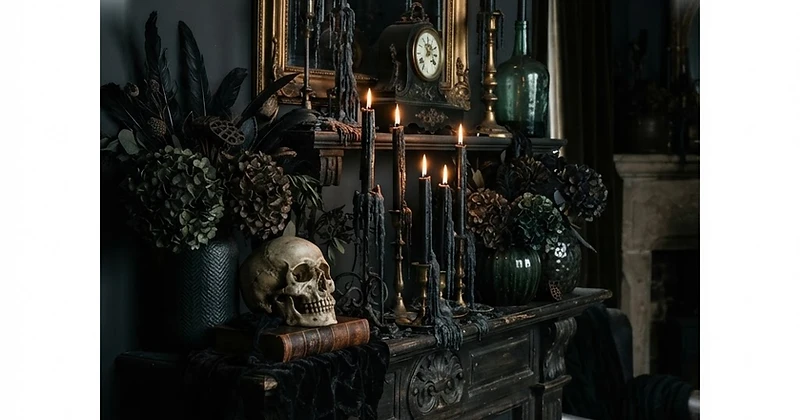
The strongest spooky decor doesn't shout — it whispers. A room that unsettles is a room where something is slightly off, and the eye can't immediately name it. Elegant gothic Halloween decor follows three disciplines: real light, a single uncanny object, and the dying garden brought indoors. Here is how to practice each — room by room.
Candles, Not Strings
Replace every string light with a real flame (or a convincing LED taper). The difference is motion: a flickering light source breathes life into still objects and casts shadows that move when you don't. Black tapers are the highest-leverage purchase in October decorating — a set of six changes a mantle more than two hundred dollars of anything else. Cluster them in odd numbers, at staggered heights, and let the drips stay.
Where you need a light that stays on all evening, choose warm and strange over bright and cheerful: a pumpkin lamp that glows like a window kept lit for a hundred years, or a witch hat night light for the bedside. The palette matters — amber, always, never white.
The Single Object
Resist the urge to scatter. A mantle crowded with skulls reads as a party store. A mantle with one small skull, half-hidden behind a stack of books, reads as a warning. The discipline scales: one object per surface, at most two per room. Choose the object for its wrongness — a hand reaching up from the shelf, a crystal ball on a dark carved base, a figurine that stands guard like something from a chapel nobody remembers building. Guests should find them one at a time, not all at once.
Bring the Outside In
Dried hydrangeas, branches stripped of leaves, a bowl of foraged pinecones — the dying garden belongs in the autumn room. Pair them with a cold material (iron, bone, blackened brass) and the contrast does the work for you. This is also the cheapest principle: October decor is already falling off the trees. Cut late, dry upside down, and keep the palette to bone, rust, and near-black.
A Room-by-Room Plan
Entryway: one light, one warning. A skull lamp or a hanging ghost, plus a taper on the hall table. Guests should feel the shift before they can name it.
Mantle and shelves: candles at staggered heights, one uncanny object half-hidden, dried branches behind the frames.
The dining table: a black runner, skull placeholders, black tapers lit before anyone sits down. A full tablescape is optional; the candlelight is not.
Bedroom and desk: the quietest register — a single ornament, a night light with a strange shape. The room where you sleep deserves decor that whispers, not shouts.
The yard: one or two pieces, well-lit, facing the road. A single glowing tombstone outlasts a dozen scattered inflatables.
The Palette
Near-black, bone, dried botanical, iron. One accent at most — oxblood or rust. If a piece wouldn't survive in the room in November, it doesn't belong in October.
The Shopping List Under $100
A starter haunt, assembled: a set of six black taper candles ($38), a desktop skull ornament ($35), and a single guardian figurine ($45) — or start with any one and let the corners accumulate. Add the larger pieces (the full harvest tablescape, the crystal ball) only after the candles have taught you where the shadows fall.
The goal is not a decorated room. It is a room that feels watched.